From Plastic Waste to a Regenerative Circular Economy
Plastic pollution is one of the most pressing environmental problems of our time. Coastal cities like Sihanoukville in Cambodia are particularly affected. It is high time to empower local communities so they can take active steps to combat plastic waste on their own.
The Problem: Lack of Waste Management Infrastructure in Cambodia’s Coastal Cities
Sihanoukville was once a small fishing village. Today, rapid urbanization and growing tourism are driving up waste volumes—while the city’s waste collection capacity remains limited. As a result, more and more communities are facing the challenge of keeping up with the rising volume of waste.
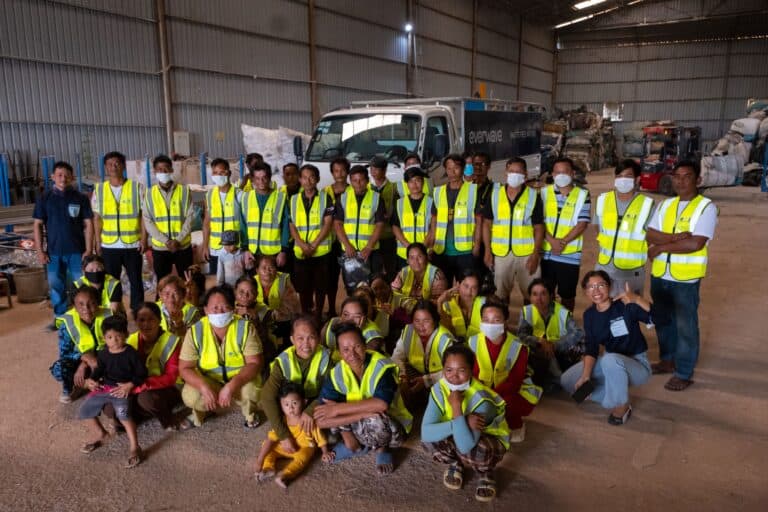
Informal waste pickers—the majority of whom are women—play a central role in the collection and recycling of plastic waste. They do valuable work for environmental protection, but in doing so are often exposed to unsafe working conditions, limited economic opportunities, social stigma, and minimal access to social security.
The Solution: The Cambodia Plastic Circularity Project
Together with the UNDP’s Cambodia Plastic Circularity Project—supported by the Coca-Cola Foundation (TCCF)—we are working on the ground to find a sustainable and long-term solution. In doing so, we are implementing inclusive solutions for a functioning circular economy. The project combines household-level waste management with community engagement, thereby raising residents’ awareness of waste separation.
Another key focus is on empowering informal waste collectors. They play a crucial but often unseen role in the removal of plastic waste: Their work makes a significant contribution to recovering plastics that would otherwise pollute ecosystems and threaten local livelihoods.
In addition, the program takes a gender-sensitive approach. The goal is to ensure that women who work as informal waste collectors have equal access to opportunities, resources, and training programs.
A Holistic Approach: The Four Levels of the Project
The project focuses on four key areas:
- Environmental Protection: Less plastic in waterways, oceans, and illegal landfills—through consistent waste sorting and safe disposal at the household level.
- Social Inclusion: Empowering women, disadvantaged households, and informal waste collectors, with the goal of ensuring that at least 50 percent of participants in all project activities are women.
- Empowering informal waste collectors: training, better working conditions, reduced occupational risks, the establishment of peer-learning networks, and new income-generating opportunities.
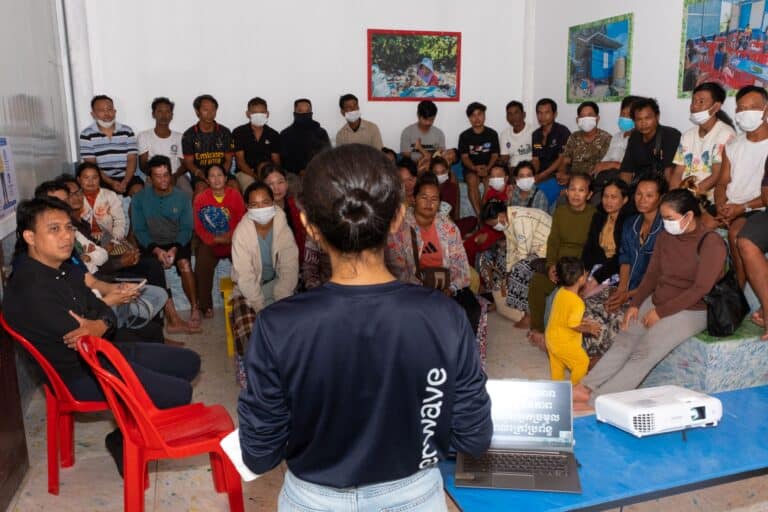
- Community Empowerment: Awareness campaigns on the 4Rs (Refuse, Reduce, Reuse, Recycle) and plastic waste management—to promote collective responsibility, long-term behavioral change, and reduced stigmatization of informal waste collectors.
With this model, we are strengthening local communities in a sustainable way—to stop plastic from entering the environment and prevent more waste from ending up in rivers and oceans.