New Cleanup Site in Siem Riep
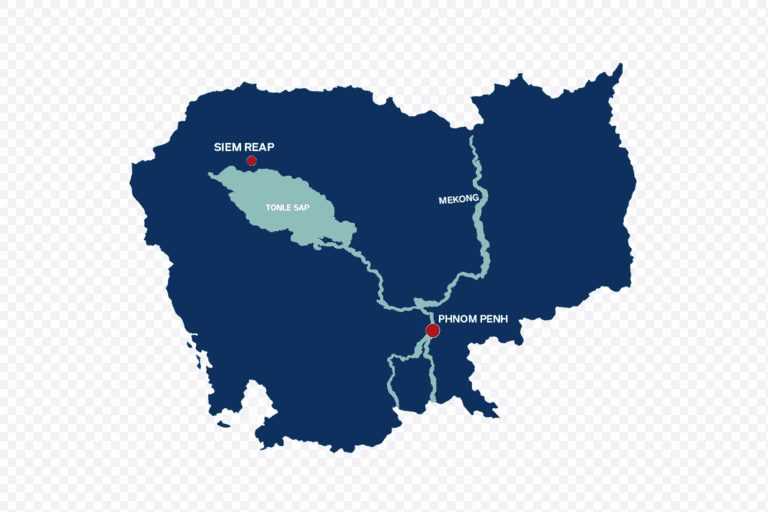
Siem Riep is located between Angkor Wat and the Tonlé Sap Lake: a city between cultural heritage and ecological conservation area. This is exactly where we are active with a new cleanup site.
The location: between cultural and ecological heritage
Angkor Wat: a UNESCO World Heritage Site, one of the most important cultural landmarks in the world and an international travel destination. Nearby lies Lake Tonlé Sap: a UNESCO Biosphere Reserve of major ecological importance for the entire region. Tonlé Sap is the largest freshwater lake in Southeast Asia and provides the basis for the livelihoods of more than 15 million people, supporting fisheries and agriculture across the region.
The combination of cultural heritage and biosphere reserve, of cultural and ecological significance, makes this place truly unique – and underscores the importance of protecting the region in the long term. On the northern edge of Lake Tonlé Sap lies the city of Siem Reap, home to our new cleanup site in Cambodia.
The problem: lack of waste infrastructure
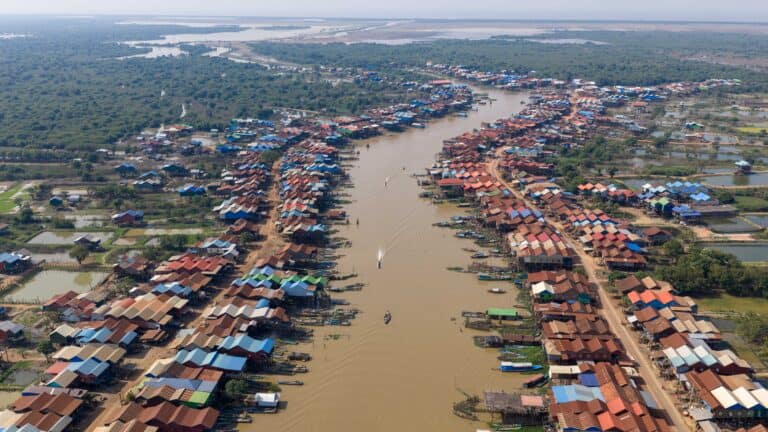
In the Siem Reap region, along the shores of Lake Tonlé Sap, there are numerous so-called floating villages – communities built directly on the water. These villages lack direct access to waste management infrastructure, such as regular waste collection or recycling systems. As a result, much household waste and plastic debris ends up directly in the lake and, consequently, in connected rivers and waterways. Growing tourism in the region further exacerbates the problem.
Rising plastic pollution and inadequate infrastructure pose an increasing threat to the fragile ecosystem of the UNESCO Biosphere Reserve. Siem Reap is not only a regional tourism hub, but is also closely connected to the lake through rivers and seasonal flooding.
Our solution: Setting up a cleanup site
By establishing a new long-term cleanup site, we can create a lasting countermeasure to the problem. Our site is built on four core pillars: Identify, Collect, Recycle, and Inspire.
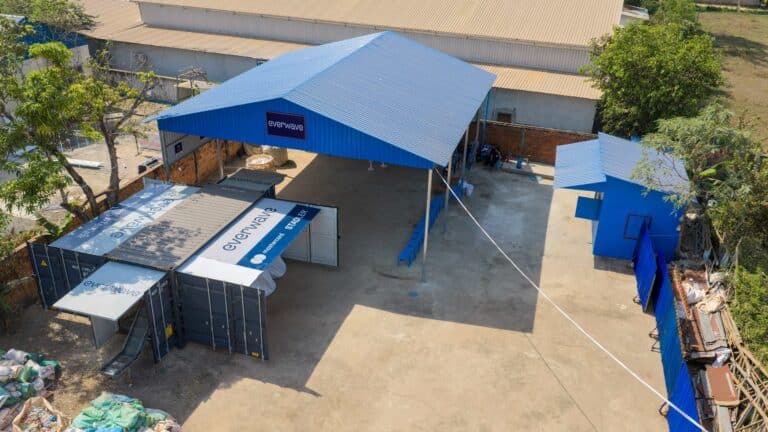
The process begins with AI-supported object recognition, which allows us to identify waste hotspots and determine the most effective cleanup locations. After analyzing the data, waste is collected both from the water and along the riverbanks. Once collected, the waste is transported to our newly built Zero Waste Center, where it is sorted using our sorting containers. The materials are then prepared for further processing and passed on to our recycling partners.
Through these process steps and our continuous on-site presence, waste can be collected, sorted, and recycled effectively. In close collaboration with local partners, policymakers, and our on-site team, this approach enables long-term change.